As artificial intelligence (AI) tools become ubiquitous in modern organizations, businesses are eager to harness their potential to boost productivity and streamline workflows. However, the promise of AI-driven transformations often clashes with real-world complexities. Without proper customization, these tools can disrupt established processes and even hinder performance. In this article, we explore how tailoring AI tools to meet users’ unique needs can unlock substantial gains in workplace efficiency and satisfaction.
The Rise of AI Tools in the Workplace
Organizations worldwide are adopting AI solutions to automate routine tasks, analyze vast data sets, and support decision-making. According to recent industry analyses, there is a growing interest in AI tools for enhancing employee performance. From chatbots that handle customer inquiries to recommendation engines that optimize supply chains, the spectrum of applications is broad. Yet, implementing these technologies successfully requires more than off-the-shelf installations; it demands a strategic approach that aligns AI capabilities with human workflows.
The Pitfalls of One-Size-Fits-All AI Solutions
When companies deploy AI tools without considering the specific context of end users, they risk undermining the very productivity gains they seek. A study published by the MIT Sloan Management Review on December 8, 2025, illustrates this point. Researchers compared sales teams using a tailored AI sales assistant against those relying on a generic, untailored system. The results were stark: salespeople with a customized AI tool consistently outperformed their peers, while the untailored solution disrupted workflows and detracted from sales performance.
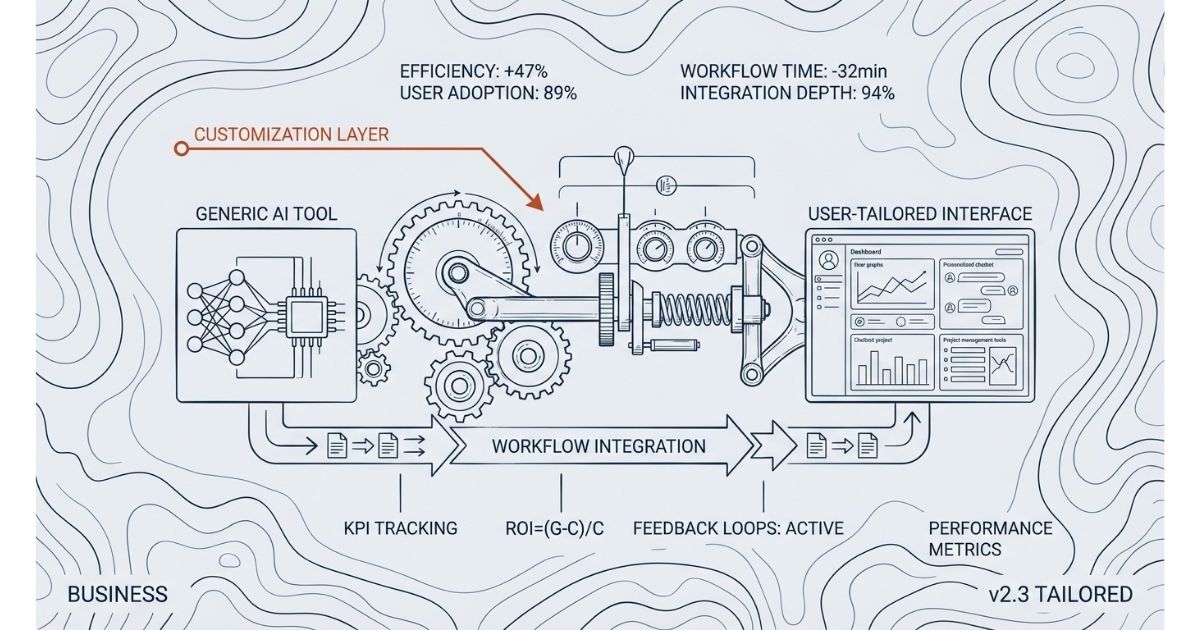
This evidence underscores a critical insight: AI tools can disrupt workflows and reduce performance if not tailored to users’ needs. When AI interfaces impose unfamiliar steps or fail to integrate with existing processes, employees spend more time troubleshooting and less time on high-value tasks. The result is frustration, reduced morale, and a slower return on investment.
Tailoring AI Tools to User Needs
Customization starts with understanding user requirements. Stakeholder interviews, workflow mapping, and pilot testing are essential steps to identify pain points and align tool features with daily routines. For example, a sales team may need AI-driven lead scoring integrated directly into their customer relationship management (CRM) dashboard, rather than a separate application that requires manual data transfers.
Key considerations for tailoring include:
- Workflow Integration: Ensure that AI recommendations appear within the tools and interfaces employees already use.
- User Experience: Adapt dashboards and alerts to the language and metrics that matter most to each role.
- Data Relevance: Train AI models on high-quality, domain-specific data so insights resonate with on-the-ground realities.
- Feedback Loops: Gather continuous input from users to refine algorithms and adjust features over time.
By embedding AI functionalities into familiar environments and aligning system outputs with user expectations, organizations can minimize disruption and foster adoption.
Best Practices for Human-AI Interaction
Effective human-AI interaction hinges on clarity, trust, and collaboration. To achieve this, companies should:
- Provide transparent explanations for AI recommendations, helping users understand how decisions are made.
- Offer training sessions and documentation tailored to different proficiency levels, from AI novices to advanced users.
- Implement controls that allow users to override or query AI suggestions when they conflict with context-specific knowledge.
- Design interfaces that balance automation and manual input, ensuring employees feel empowered rather than displaced.
These practices cultivate a symbiotic relationship between humans and machines, maximizing the strengths of both. When employees trust the AI’s reasoning and feel in control, they are more likely to engage with the tool and leverage its insights effectively.
Measuring the Impact on Workplace Performance
Quantifying the effects of tailored AI tools involves tracking key performance indicators (KPIs) before and after implementation. Metrics might include:
- Time saved on routine tasks
- Accuracy of data-driven decisions
- Rate of user adoption and satisfaction
- Revenue growth or cost savings attributable to AI-driven processes
In the MIT Sloan study, the sales team using a tailored AI assistant recorded a significant uptick in closed deals, while the control group experienced workflow bottlenecks. This real-world evidence demonstrates that when AI is designed with end users in mind, it can serve as a powerful catalyst for improved outcomes.
It is also important to conduct regular performance reviews to identify areas where the AI’s logic may drift or become outdated. As business conditions evolve, ongoing model retraining and feature adjustments are necessary to maintain relevance and effectiveness.