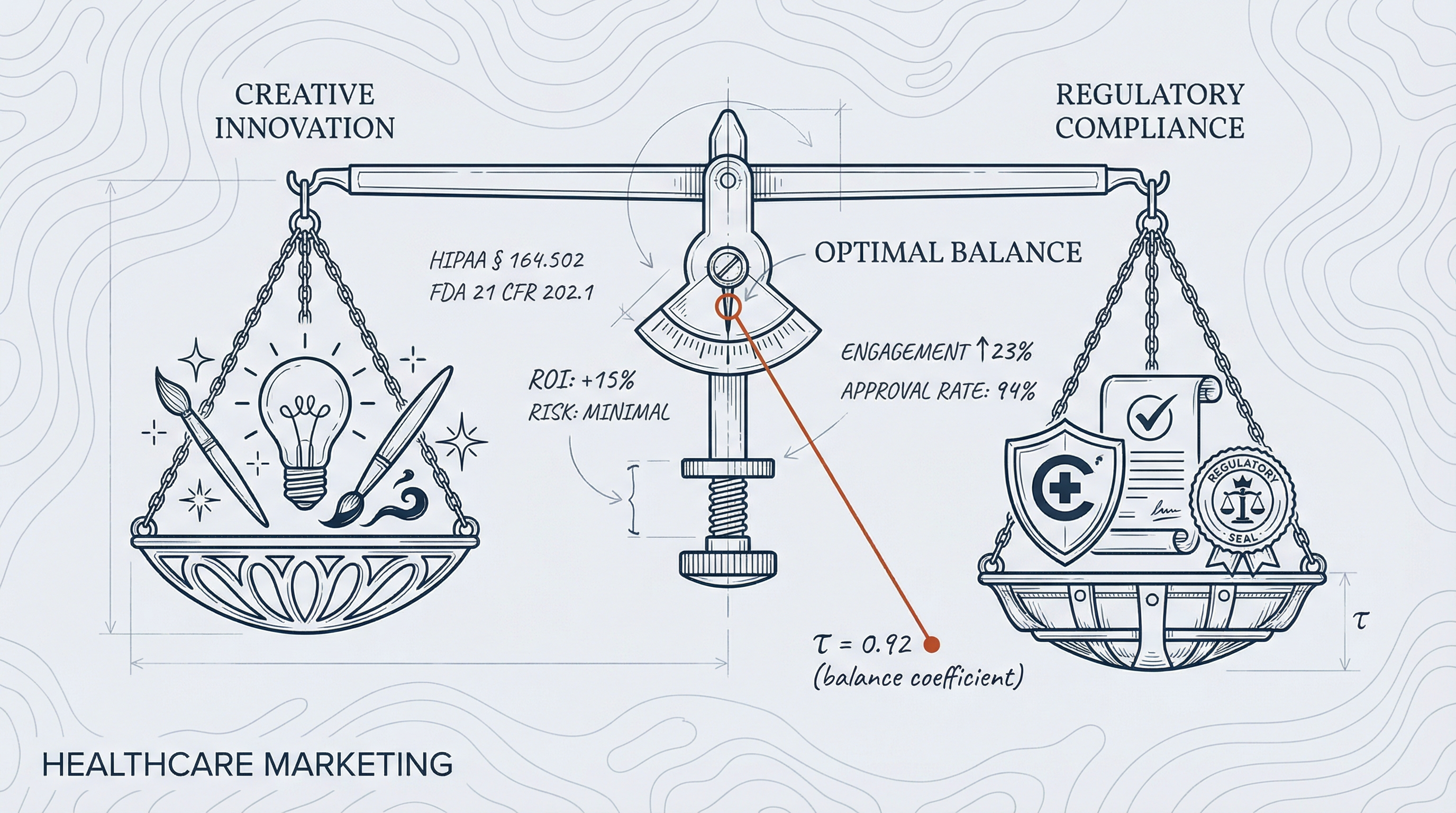
In today’s rapidly evolving healthcare landscape, marketing teams operate under intense scrutiny from regulators, industry bodies, and patients alike. While creative innovation has become a cornerstone of compelling campaigns, regulated industries like healthcare impose strict compliance rules that can limit messaging, delay launch schedules, and slow momentum. A single misstep in promotional content can result in compliance violations, regulatory fines, or reputational damage, making it critical for marketers to tread carefully. Navigating these constraints requires a nuanced approach that preserves the integrity of marketing creativity while ensuring full adherence to regulatory standards. This article draws on industry insights and evidence from a recent MarTech study to explore practical strategies for achieving a harmonious balance between innovation and regulation in healthcare marketing. Marketers will gain actionable guidance on streamlining compliance workflows, leveraging technology, and fostering cross-functional collaboration to keep campaigns creative and compliant.
Understanding the Compliance Landscape in Healthcare Marketing
The healthcare industry is defined by a complex web of regulations designed to protect patient privacy, ensure the accuracy of medical information, and maintain public trust. Laws such as the Health Insurance Portability and Accountability Act (HIPAA) in the United States and the General Data Protection Regulation (GDPR) in Europe establish stringent requirements for how personal data is collected, stored, and shared. Marketing teams must carefully review every piece of collateral—from social media posts and email campaigns to patient-facing brochures—to verify that all claims are substantiated and that no health-related information veers into the realm of unauthorized medical advice. Beyond privacy, agencies like the U.S. Food and Drug Administration (FDA) and the Office of Inspector General (OIG) impose guidelines on pharmaceutical and device marketing, demanding clear disclosures, fair balance, and accurate risk communication. This rigorous environment fosters a culture of caution that can inadvertently stifle creative experimentation.
Impact of Compliance on Marketing Creativity
Regulatory constraints have a profound impact on the creative process. As noted in the MarTech study “Rethinking marketing creativity in compliance-heavy industries,” ‘Regulated industries face challenges that can halt momentum, delay campaigns and limit what marketers can say.’ This tension arises from multiple review cycles, heavy legal oversight, and last-minute revisions that dilute original concepts. Marketers report extended approval timelines—sometimes stretching weeks beyond planned launch dates—and an overreliance on boilerplate language that fails to resonate with target audiences. The result is a struggle to develop bold, differentiated campaigns while avoiding the risk of non-compliance. Ultimately, rigid compliance protocols can sap team morale and reduce the agility needed to respond to fast-moving market trends or emerging health crises.
The Regulatory Framework: Key Compliance Requirements
Healthcare marketers must navigate a diverse array of standards and guidelines at federal, state, and international levels. In the United States, HIPAA mandates the protection of patient health information, while the FDA regulates advertising claims related to pharmaceuticals, medical devices, and over-the-counter products. The OIG issues voluntary compliance program guidance that outlines best practices for internal controls, risk assessment, and staff training. State regulations can add further layers, including specific consent requirements for telehealth or digital communication. On the international stage, GDPR governs data privacy in Europe, and other jurisdictions enforce their own local statutes. Failure to meet these requirements can result in substantial fines, legal action, and damage to brand reputation. A comprehensive understanding of this framework is essential before creative ideation begins to avoid costly rework and ensure timely campaign execution.
Strategies to Balance Creativity with Compliance
Balancing creativity and compliance begins with early collaboration between marketing, legal, and medical affairs teams. Integrate compliance checkpoints into the creative brief, clearly identifying non-negotiable legal requirements alongside areas where marketers can experiment. Developing a compliance playbook—complete with standardized templates, approved claim libraries, and disclaimer guidelines—reduces ambiguity and accelerates review cycles. Encourage creative “safe houses,” where initial brainstorming can proceed without legal constraints, followed by rapid peer review to surface potential compliance issues. Establishing cross-functional workshops and regular training sessions ensures that marketing teams stay current on evolving regulations. By co-creating checklists, style guides, and decision trees, organizations can streamline processes, minimize rework, and maintain the essence of original creative ideas without compromising regulatory integrity.
Implementing Compliance Workflows without Stifling Innovation
Effective compliance workflows strike a balance between thorough review and efficient turnaround. One approach is to segment the process into distinct phases: initial concept ideation, compliance pre-screening, legal vetting, and final approvals. Assign clear responsibilities—such as a compliance champion who coordinates reviews, a creative lead who oversees content quality, and a project manager who tracks timelines—to prevent duplication and ensure accountability. Utilize Kanban boards or project management tools with service-level agreements (SLAs) that set target review times (e.g., 24–48 hours for first-pass feedback). Regular compliance check-ins and stand-up meetings help identify obstacles early. Training creative teams on common compliance pain points empowers them to self-audit work before formal review, reducing back-and-forth and preserving creative momentum.
Leveraging Technology for Compliance Workflows
Technology solutions can automate routine compliance tasks and accelerate approval cycles, freeing creative teams to focus on high-value work. Digital asset management (DAM) systems with built-in validation rules can automatically flag non-compliant text, missing disclaimers, or unauthorized medical imagery. Marketing resource management (MRM) platforms manage reviews and version control, enabling parallel approvals and reducing email bottlenecks. Natural language processing (NLP) and AI-powered tools analyze copy in real time, comparing proposed messaging against regulatory guidelines to surface potential issues. Integrating compliance management software with collaboration platforms creates a single source of truth, ensuring that every stakeholder accesses the latest approved assets. By embedding compliance checks into the marketing tech stack, teams can maintain creative velocity while upholding audit-ready documentation and regulatory adherence.
Learning from Evidence: The MarTech Study
The MarTech article “Rethinking marketing creativity in compliance-heavy industries,” published on December 5, 2025, provides a clear view of the challenges and opportunities healthcare marketers face. The study highlights that regulated industries often struggle with approval delays and message restrictions that can undermine campaign effectiveness. However, organizations that invest in structured compliance workflows and cross-functional training report smoother processes and faster time-to-market. Key findings include the value of co-created templates, the importance of continuous compliance education, and the positive impact of technology-enabled reviews. This evidence demonstrates that proactive compliance management not only mitigates risk but can serve as a strategic enabler of innovation, boosting both campaign quality and organizational agility.
Future Trends and the Path Forward
As healthcare marketing continues to evolve, industry leaders are placing an increasing focus on compliance workflows within their broader strategies. Organizations are integrating compliance metrics into marketing performance dashboards to monitor review cycle times, approval rates, and audit outcomes. Predictive analytics tools are emerging to forecast potential regulatory risks before they impact campaigns, allowing teams to pivot or rework content in advance. Cross-functional “innovation councils,” composed of marketers, legal experts, and medical advisors, guide compliant idea generation and rapid prototyping. Collaboration platforms with secure data rooms ensure transparency and streamline remote reviews. By embracing these advancements, healthcare organizations can transform compliance from a gatekeeper into a strategic enabler—fueling both brand trust and creative impact.
Successfully navigating compliance in healthcare marketing requires a deliberate balance of creativity and regulation. By understanding the regulatory landscape, adopting proactive strategies, and implementing structured workflows, marketers can preserve creative momentum without compromising legal integrity. Leveraging technology platforms and drawing on evidence-based best practices—such as those highlighted in the MarTech study—enables faster approvals, stronger messaging, and enhanced brand trust. As the focus on compliance workflows intensifies, healthcare organizations that prioritize collaboration, training, and innovative compliance tools will be best positioned to deliver impactful, compliant campaigns at scale. In this dynamic environment, effective compliance management becomes a catalyst for creative excellence rather than an obstacle.