Artificial intelligence (AI) is reshaping the modern workplace, prompting businesses, policymakers and employees to reconsider the future of work. According to recent research, AI is not only augmenting human capabilities but also projected to replace a significant percentage of U.S. workers in routine roles. As organizations accelerate automation efforts, understanding the scope of AI’s impact on employment becomes critical. By exploring the latest findings and evidence, we can identify practical strategies to help workers and businesses adapt to this rapidly evolving landscape.
Scope of AI’s Disruption
As AI technologies mature, their ability to perform tasks once reserved for human workers continues to grow. Machine learning algorithms, robotic process automation and natural language processing solutions are increasingly capable of handling data entry, scheduling, inventory management and customer support. Routine, rule-based tasks—especially those that involve repetitive decision-making—are at highest risk of automation. This trend underscores a broader shift in the labor market, where demand for adaptable, high-skill and creative roles is on the rise, while traditional administrative and operational positions face mounting pressure.
Evidence from the MIT Study
In a comprehensive analysis published in December 2025 by Inc., an MIT study revealed that AI is already capable of replacing 11.7 percent of U.S. workers. The research emphasizes that disruption is most pronounced in routine functions within human resources, logistics and finance. These findings sharpen earlier projections, indicating that the pace of change may outstrip previous forecasts. By documenting real-world capabilities and mapping them against existing job categories, the study provides a data-driven foundation for stakeholders aiming to anticipate and manage workforce transitions.
Impacted Sectors and Roles
According to the MIT findings, functions in HR—such as resume screening, benefits administration and basic employee inquiries—are increasingly handled by AI-powered platforms. In logistics, tasks like shipment tracking, route optimization and warehouse inventory control are automated through advanced analytics and robotics. Similarly, finance departments are leveraging AI for invoice processing, expense auditing and regulatory compliance checks. While these technologies bring efficiency gains and cost savings, they also concentrate disruption pressures on mid-level, routine positions.
The granular breakdown of affected roles highlights a dual imperative: organizations must balance productivity improvements with responsible workforce planning. As automation accelerates, companies risk creating talent gaps in functions that cannot be fully automated—yet may suffer from reduced staffing or diminished on-the-job expertise. Proactive measures to reskill and redeploy affected employees can ease this transition and preserve institutional knowledge.
Strategies for Workforce Adaptation
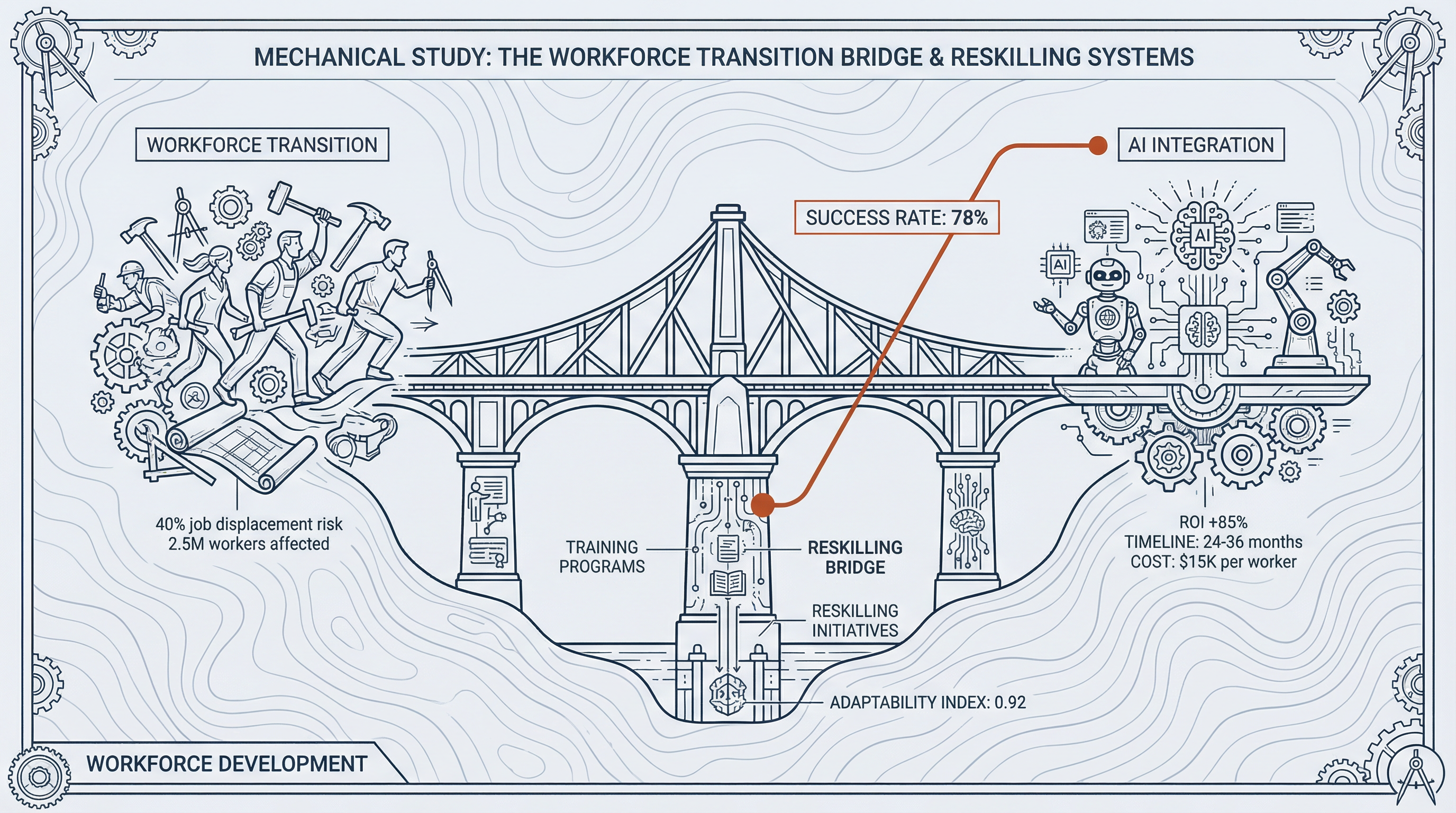
To navigate the evolving job landscape, businesses and workers can pursue a range of complementary strategies. Upskilling remains a cornerstone approach: investing in digital literacy, data analysis and AI oversight training equips employees to work alongside intelligent systems. Equally important is reskilling, which enables individuals to transition into emerging roles such as AI trainers, workflow designers and human–machine collaboration specialists.
Cross-training programs allow employees to gain exposure to multiple functions, fostering greater flexibility and resilience. For instance, HR professionals can learn basic data science techniques to interpret AI-generated insights, while logistics staff might acquire knowledge in supply chain analytics. By cultivating a culture of continuous learning, organizations can transform potential job losses into opportunities for skill diversification.
Mentorship and peer-to-peer learning networks also play a vital role. Seasoned employees can guide colleagues through new processes and tools, reinforcing on-the-job application of AI technologies. This hands-on approach accelerates knowledge transfer, builds confidence and fosters a collaborative mindset. Furthermore, incorporating lifelong learning incentives—such as tuition reimbursement or dedicated training hours—signals organizational commitment and drives sustained engagement.
Policy and Organizational Responses
Beyond individual companies, coordinated policy interventions are essential to address the broader implications of automation. Governments can support workforce adaptation through targeted funding for vocational training, public–private partnerships and employment transition services. By aligning educational curricula with industry needs, policymakers help ensure that graduates possess the skills demanded by an AI-driven economy.
Organizations should also revisit talent management frameworks. Strategic workforce planning that integrates AI impact assessments can guide hiring, internal mobility and succession planning. Leaders can adopt a human-centric design mindset, structuring roles around tasks that maximize human judgment, creativity and emotional intelligence—qualities that remain difficult for machines to replicate.
Investing in change management and transparent communication builds trust and reduces anxiety. When employees understand the rationale behind automation initiatives and see clear pathways for career growth, they are more likely to embrace new technologies. Collaborative labor–management dialogues further foster a shared vision for a future where humans and AI coexist productively.
By leveraging a combination of upskilling, reskilling, policy support and organizational redesign, stakeholders can mitigate the risks of job displacement while harnessing AI’s transformative potential. Through these concerted efforts—spanning individual learning, corporate strategy and public policy—employers can adapt to the AI era in a way that fosters inclusive growth and sustains meaningful employment.