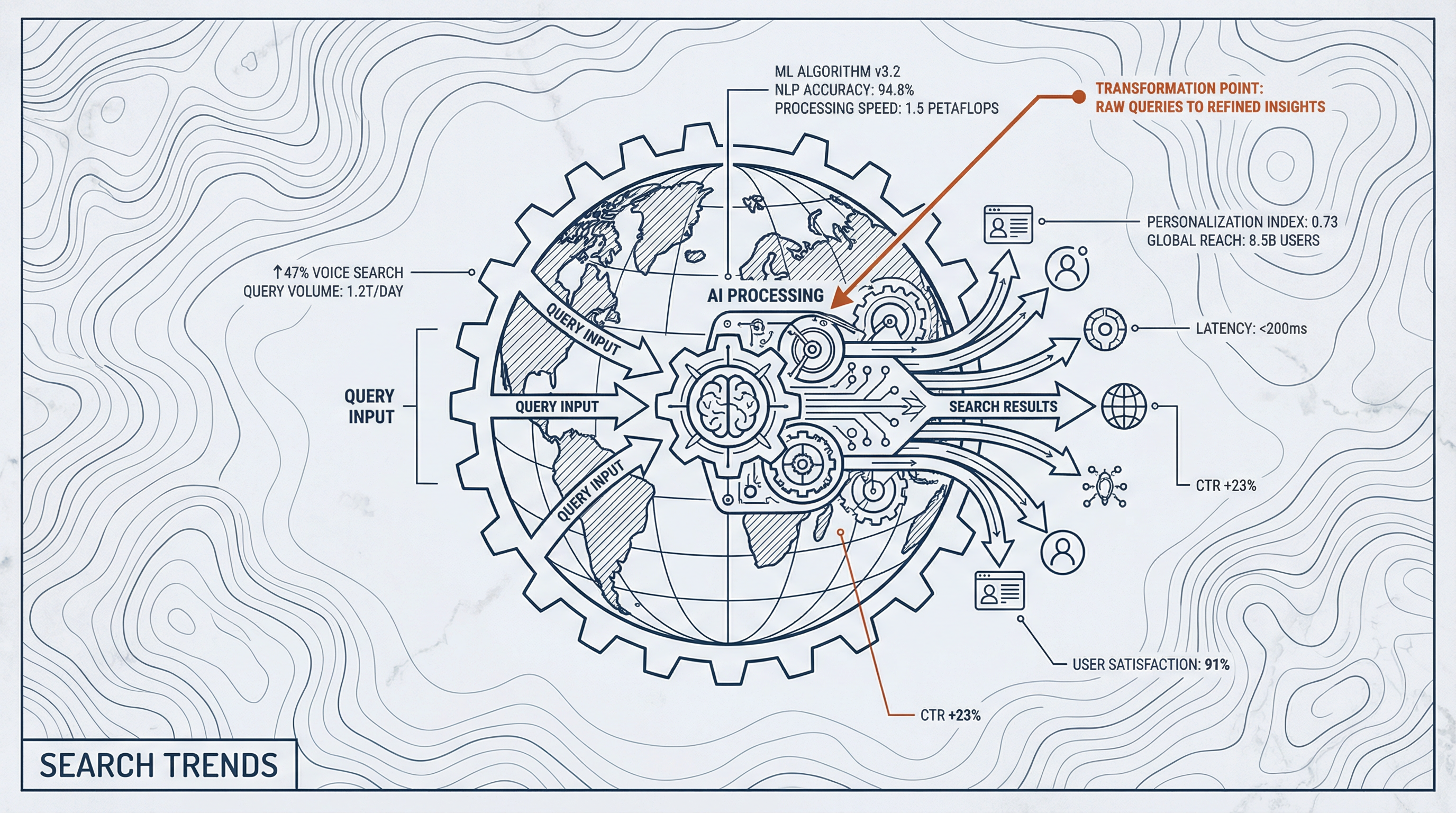
In recent years, we’ve witnessed a dramatic evolution in how users interact with search engines and online platforms. Traditional keywords and simple queries are being supplanted by sophisticated, intent-driven searches that leverage cutting-edge artificial intelligence (AI) technologies. According to the latest data from the Search Engine Journal, “Gemini ranked first worldwide, with DeepSeek appearing in both US and global lists,” underscoring a significant shift in user interest towards advanced AI tools. This article explores the impact of AI tools on search trends, examines the leading platforms, and considers what these developments mean for businesses, marketers, and end users alike.
The Rise of AI Tools in Search Queries
The past decade has seen AI move from experimental research labs to mainstream applications, fundamentally transforming digital experiences. AI tools are now at the forefront of trending queries, reflecting a broader appetite for technologies capable of understanding, predicting, and responding to user needs with unprecedented accuracy. In its “Year In Search 2025” overview, Search Engine Journal highlights that AI-driven platforms like Gemini and DeepSeek dominate global interest, signaling that users are actively seeking deeper insights and more intuitive search experiences.
This trend isn’t merely anecdotal. Data indicates that search queries incorporating AI tools have surged, confirming an increasing interest in AI technologies and their applications. Users no longer settle for static results; they want personalized recommendations, dynamic content analysis, and conversational interfaces that can process complex queries. As a result, AI tools have become essential components in the modern search ecosystem.
Key Players: Gemini and DeepSeek
Among the myriad of AI tools making headlines, two names consistently appear: Gemini and DeepSeek. Both platforms represent the cutting edge of AI-driven search technology, yet they offer distinct capabilities that cater to diverse needs.
Gemini has secured the top spot worldwide, a testament to its robust feature set and user-friendly interface. Designed to interpret natural language queries with high precision, Gemini leverages advanced neural networks to deliver contextually relevant results. Whether a user seeks academic research, market analysis, or creative inspiration, Gemini’s ability to parse nuanced requests has propelled it to global prominence.
DeepSeek, meanwhile, has achieved notable success in both the US and international markets. Its strength lies in deep content analysis: DeepSeek can sift through vast datasets, identify patterns, and surface insights that are often buried beneath layers of unstructured information. This capability makes it an invaluable tool for professionals in sectors such as finance, healthcare, and legal services, where understanding subtle correlations can yield significant advantages.
The dual prominence of Gemini and DeepSeek underscores a broader reality: users crave both conversational ease and analytical depth. As AI tools continue to evolve, we can expect further specialization, with platforms tailored to specific industries and use cases.
Understanding User Behavior Shifts
What drives the surge in AI-centered searches? At a fundamental level, it’s a reflection of changing user expectations and behaviors. Today’s digital consumers are accustomed to instantaneous, precise answers—and AI tools deliver on that promise. Instead of manually scanning through pages of results, users pose detailed questions and receive synthesized responses in real time.
Moreover, AI tools empower users to explore denser, more technical topics without requiring specialized expertise. A marketing manager can request predictive models for campaign performance, a researcher can ask for data-driven hypotheses, and a content creator can obtain stylistic suggestions tailored to their audience. This accessibility reduces barriers to entry, fostering curiosity and encouraging deeper engagement.
From a search intent perspective, queries involving AI tools often fall into the category of informational and transactional—users not only seek to understand how these tools work but also to apply them in practical scenarios. This dual intent drives higher engagement rates, longer session durations, and increased likelihood of conversion, offering fertile ground for businesses and content creators to develop relevant resources.
Implications for Businesses and Marketers
For businesses and marketers, the rise of AI tools in search trends presents both opportunities and challenges. On one hand, integrating AI-driven features into products and services can enhance customer experiences and streamline operations. On the other hand, organizations must navigate a competitive landscape where simply mentioning AI in marketing copy is no longer sufficient.
Here are key considerations for leveraging this trend:
1. Optimize for AI-Driven Queries: Ensure your content addresses the specific information needs associated with AI tools. Use clear, concise language and structured data to facilitate interpretation by AI-powered search algorithms.
2. Develop Specialized Resources: Create in-depth guides, case studies, and tutorials focused on platforms like Gemini and DeepSeek. By offering authoritative insights, you position your brand as a trusted expert in AI applications.
3. Embrace Conversational Interfaces: Consider implementing chatbots or voice assistants that leverage AI to handle complex queries. This not only meets user expectations but also generates valuable interaction data for continuous improvement.
4. Monitor Emerging Trends: The AI landscape evolves rapidly. Regularly analyze trending queries and update your strategy to reflect new developments. Tools that provide real-time keyword insights will become indispensable.
By aligning content and product strategies with the growing prominence of AI tools, businesses can capture user interest at critical decision points and foster lasting engagement.
Future Outlook: What’s Next in AI Search Trends
Looking ahead, the momentum behind AI tools shows no signs of slowing. As algorithms become more sophisticated and datasets grow richer, we can anticipate several key trends:
1. Hyper-Personalization: AI will increasingly tailor results to individual preferences, learning from user behavior across platforms to deliver hyper-relevant content.
2. Multimodal Search: Text, voice, image, and video queries will converge, with AI tools capable of processing and synthesizing information across multiple media types.
3. Ethical and Responsible AI: As reliance on AI grows, users and regulators will demand transparency and accountability. Platforms that prioritize fairness and explainability will gain a competitive edge.
4. Industry-Specific Solutions: Expect a proliferation of AI tools designed for specialized fields—legal research, medical diagnostics, financial forecasting—each optimized for domain-specific challenges.
These developments will not only refine how users search for information but also reshape entire industries by democratizing access to advanced analytical capabilities.
Ultimately, the trajectory of AI tools within search trends reflects a broader narrative: the convergence of human curiosity with machine intelligence. As users continue to push the boundaries of what’s possible, AI-driven platforms will adapt and evolve in tandem, ushering in an era of unprecedented insight and innovation.
The emergence of AI tools as top trending queries globally marks a pivotal moment in the evolution of search. From the dominance of Gemini to the analytical prowess of DeepSeek, users are embracing technologies that offer deeper understanding and more intuitive interactions. For businesses, marketers, and content creators, this shift presents an opportunity to engage audiences in novel ways, optimize for AI-driven intent, and stay ahead of rapidly changing trends. By recognizing the significance of AI tools in shaping user behavior and search patterns, organizations can position themselves for success in an increasingly intelligent digital landscape.